
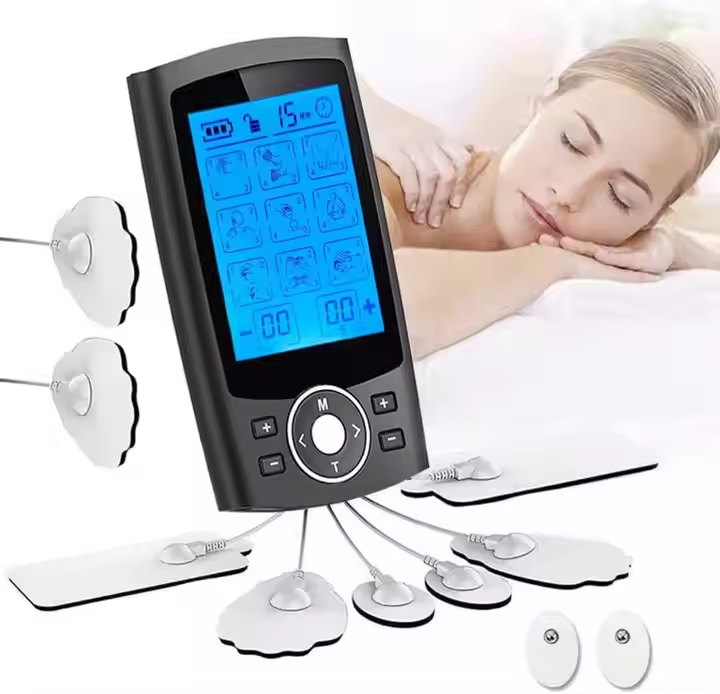
Product listings often describe a device as a “TENS/EMS muscle stimulator” and highlight a large number of modes. However, the mode count alone does not explain how the device works or whether it fits your intended use. This guide explains TENS vs EMS modes from a product-comparison perspective and lists the specifications, accessories and safety information to check before ordering.
This article provides general product information only. It does not recommend a therapy or replace the device manual or advice from a qualified healthcare professional.
What Do TENS and EMS Labels Mean?
TENS and EMS are labels commonly used for different electrical stimulation program groups. A device may present them as separate program families, preset patterns or numbered modes. The exact waveform, pulse width, pulse rate and intensity range can differ between models, so two products with the same mode label may not feel or operate the same.
Do not choose a product based only on a claim such as “24 modes” or “36 modes.” Review the manufacturer’s technical information and the controls available on the actual model.
TENS vs EMS: Product Features to Compare
| Feature | What to verify |
|---|---|
| Program labels | Whether TENS and EMS programs are clearly identified in the manual and on the display. |
| Mode details | Whether the manual describes each preset rather than listing only a mode number. |
| Intensity levels | How intensity is adjusted and whether each channel can be controlled independently. |
| Channels | The number of output channels and how many electrode pads can be connected at one time. |
| Timer | Available session times, automatic shutoff and whether the timer can be changed. |
| Electrode connector | Pin or snap type, dimensions and compatibility with replacement pads and lead wires. |
| Power source | Replaceable batteries or rechargeable battery, charging cable and voltage requirements. |
| Instructions | Whether placement diagrams, warnings, contraindications and cleaning guidance are supplied. |
Why the Number of Modes Can Be Misleading
One manufacturer may count every preset pattern as a separate mode, while another may group several patterns under one program. Some devices also count body-area icons as modes even when the underlying output pattern is similar. For a useful comparison, look beyond the headline number and check:
- whether the device separates program type from body-area selection;
- whether frequency and pulse settings are disclosed;
- whether intensity can be changed gradually;
- whether the selected settings remain visible during operation;
- whether the device remembers previous settings or resets after use.
Check the Channels and Intensity Controls
A dual-channel unit can normally connect two pairs of electrode pads, but “dual channel” does not always mean that both channels have independent controls. Confirm whether each channel has its own intensity adjustment and whether the display clearly shows the active channel.
Intensity should be adjusted according to the supplied instructions. A higher setting is not automatically more appropriate. Stop using the device and consult the official guidance if the output feels unexpectedly sharp, uncomfortable or inconsistent.
Electrode Pad and Lead-Wire Compatibility
Replacement accessories are an important ownership cost. Before ordering a device, identify the electrode connector type, pad dimensions, intended placement area and lead-wire design. Similar-looking connectors may not fit securely or may have different electrical specifications.
Use our TENS/EMS electrode pad compatibility checklist for a detailed accessory review. You can also inspect the package information for the TENS/EMS Muscle Stimulator – 24 Modes.
Display and Control Checklist
- Mode name or number is easy to identify.
- Selected channel and intensity are displayed separately.
- Timer information remains visible.
- Buttons are clearly labeled and cannot be pressed accidentally too easily.
- A lock function is available if stated in the product specifications.
- The manual explains how to pause, stop and reset a session.
- Battery level or charging status is shown.
Review Safety Information Before Purchase
Electrical stimulation devices are not suitable for every person or every body area. Before use, read all manufacturer warnings and contraindications. Pay particular attention to guidance relating to implanted electronic devices, heart conditions, pregnancy, impaired sensation, damaged or irritated skin, and placement near the head, neck or chest.
Do not place electrodes on an area that is not allowed by the manufacturer. Do not use a damaged lead wire, dried pad or device with a cracked housing. If you are uncertain whether a product is appropriate for you, ask a qualified healthcare professional before using it.
Package Contents to Confirm
Check whether the listed price includes:
- the main stimulator unit;
- one or more lead wires;
- the stated number and size of electrode pads;
- batteries or a charging cable;
- a storage pouch or pad holder;
- an English-language instruction manual;
- any adapter required for your destination country.
Product photos may show optional accessories. Use the written package-content list as the primary reference and ask for clarification before ordering if the information is inconsistent.
Questions to Ask Before Buying
- What is the exact model number?
- How are TENS and EMS programs identified?
- Are the technical output specifications provided?
- How many independent channels are available?
- What electrode connector and pad sizes are required?
- Are replacement pads and lead wires available?
- What power or charging method does the device use?
- Which warnings and placement restrictions apply?
- What is included in the package?
- What are the shipping and return conditions?
Frequently Asked Questions
Is a device with more modes always better?
No. Mode-counting methods vary. Clear instructions, controllable intensity, suitable channels, compatible accessories and safety information are more useful comparison points.
Are TENS and EMS modes the same on every device?
No. Program names and output settings vary by manufacturer and model. Check the manual for the exact device.
Can any electrode pad be used with a TENS/EMS unit?
No. The connector, pad size, lead wire and device specifications must be compatible. Use only accessories permitted by the manufacturer.
Can both channels use different intensity levels?
Some models allow independent adjustment, while others do not. Verify this feature in the technical specifications and manual.
Should I select the highest intensity I can tolerate?
No. Follow the device instructions for gradual adjustment. Stop if use becomes uncomfortable and seek appropriate professional guidance when needed.
Final Buying Checklist
Compare the complete device rather than its mode count: program documentation, intensity controls, channel design, timer, electrode compatibility, power source, package contents and safety instructions. Browse WongTech’s Health Devices, read the TENS/EMS safety and pad placement guide, and review our Shipping Information and Return & Refund Policy before ordering.
Target keyword: TENS vs EMS modes.
Suggested image alt text: “TENS vs EMS modes and muscle stimulator buying checklist.”
This article is general product information and does not replace manufacturer instructions or professional medical advice.