
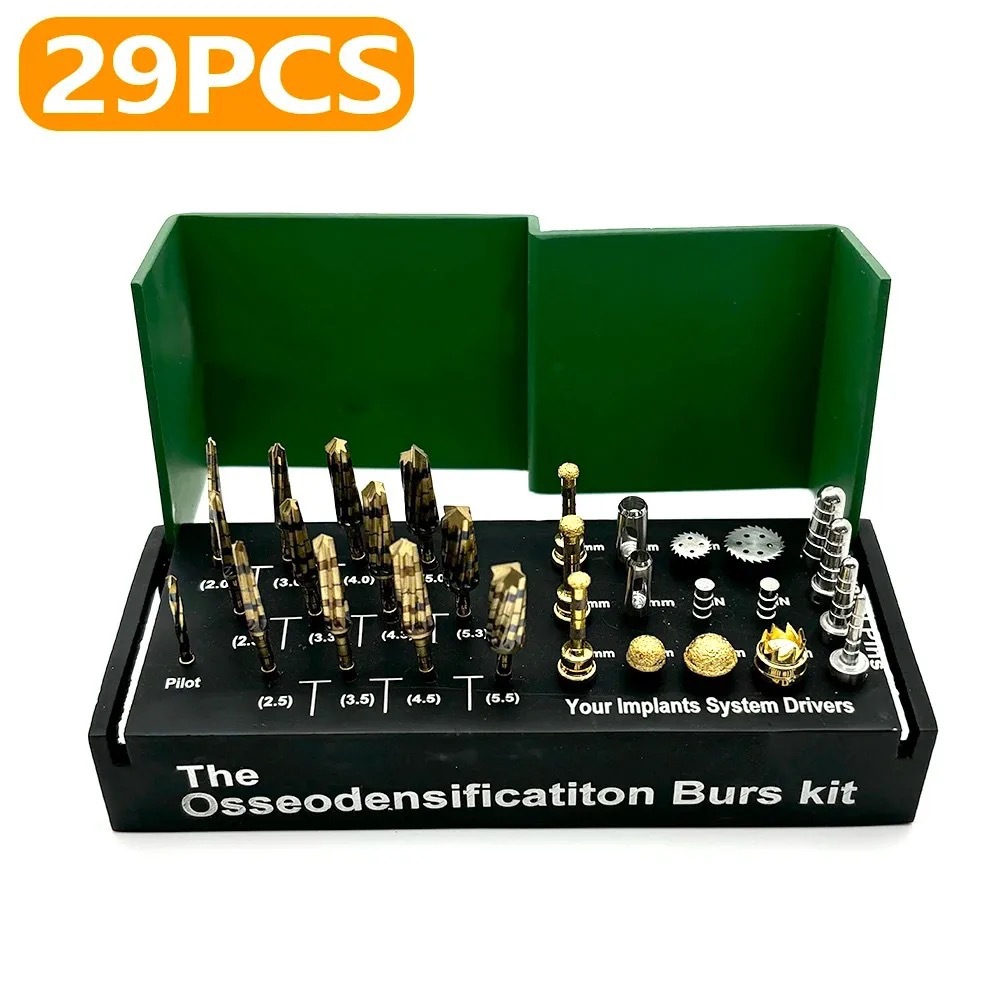
Dental implant drill bits and burs are professional instruments whose reprocessing requirements depend on their material, design and manufacturer instructions. Before ordering a set, trained dental professionals should confirm whether each component is reusable, how it must be cleaned and which validated sterilization parameters apply. This dental implant drill bit sterilization checklist helps buyers identify the documentation and product details to request.
This article provides purchasing and product-information guidance only. It is not a clinical protocol and does not replace the instrument manufacturer’s instructions, your facility’s validated procedures or applicable local regulations.
First Confirm Whether the Product Is Supplied Sterile
Do not assume a new instrument is sterile because it is individually wrapped or appears clean. Look for an explicit sterile status, intact sterile-barrier information and the manufacturer’s handling instructions. If a product is supplied non-sterile, it normally requires the documented preparation process before first use.
- Check whether each component is labelled sterile or non-sterile.
- Confirm whether packaging is only protective or forms a sterile barrier.
- Review any lot number, reference number and expiration information.
- Do not use an item if the required packaging is damaged or its status is unclear.
Check Reusable or Single-Use Status
Some instruments are designed for repeated processing, while others have a stated maximum number of uses or are intended for one use only. Never infer reusability from appearance or price. Ask for written manufacturer information covering:
- reusable or single-use designation;
- any maximum number of processing or clinical cycles;
- inspection and replacement criteria;
- conditions that require immediate disposal;
- traceability and recordkeeping requirements.
Material and Surface Information
The instrument material and surface treatment can affect compatible detergents, exposure limits and inspection methods. Request the exact material specification rather than relying on a general phrase such as “medical steel.” Also confirm whether any coating, color coding, laser marking, plastic component or silicone holder has separate care requirements.
Cleaning Instructions to Request
| Information | Question to verify |
|---|---|
| Point-of-use handling | What must be done immediately after use and before transport? |
| Manual cleaning | Which detergent, concentration, water quality, tools, time and temperature are permitted? |
| Automated cleaning | Is a washer-disinfector process validated for the instrument? |
| Lumens or recesses | Are special brushes, irrigation or inspection steps required? |
| Rinsing and drying | What water quality and drying method are specified? |
| Ultrasonic cleaning | Is it permitted, required or prohibited, and under what conditions? |
A vague instruction such as “clean normally” is not enough for a professional reprocessing decision. Complex flutes, internal features and narrow spaces require particular attention according to the supplied instructions.
Sterilization Parameters Must Be Product-Specific
Confirm the exact sterilization method and validated parameters stated by the manufacturer, including cycle type, exposure temperature, exposure time, drying conditions, packaging system and any regional limitations. Do not copy parameters from a visually similar instrument.
If the set includes a tray, holder, silicone insert or mixed materials, verify whether the complete assembly can be processed together or whether components must be separated. Confirm loading orientation and whether lids or locks must remain open.
Inspect the Storage and Sterilization Tray
- Does the tray securely retain each instrument without damaging cutting surfaces?
- Are drill positions and sizes clearly marked?
- Can cleaning solution and steam reach required surfaces?
- Does the tray manufacturer provide separate reprocessing instructions?
- Are missing or substituted components easy to identify?
- Is the tray intended as a sterilization container, an organizer, or only a shipping case?
A green box or cassette shown in a product photo should not automatically be treated as validated sterile-barrier packaging.
Pre-Purchase Documentation Checklist
- Exact product name, model and reference number
- Manufacturer identity and contact information
- Complete list of components and sizes
- Material and coating information
- Sterile or non-sterile supply status
- Reusable, single-use or limited-use designation
- Current cleaning, disinfection and sterilization instructions
- Compatible equipment and process limitations
- Inspection, maintenance and replacement criteria
- Lot or batch traceability information
- Packaging and transport conditions
- Applicable regulatory documentation for the destination and intended use
Inspection Before and After Reprocessing
The manufacturer instructions should define acceptable condition. Typical inspection topics may include visible residue, corrosion, discoloration, damaged flutes, bending, cracks, worn markings, loose components and secure connection to the intended handpiece or driver. Magnification or other inspection equipment may be required by the facility procedure.
Do not continue using an instrument merely because it still fits the holder. Remove questionable or damaged components from service and follow the manufacturer’s replacement and disposal guidance.
Compatibility Is Separate From Reprocessing
A drill bit can have complete cleaning instructions and still be incompatible with the intended implant workflow, handpiece or guided system. Confirm diameter, length, shank type, connection, depth-control features, sequence and intended system separately.
Use WongTech’s Dental Implant Drill Bit Set Compatibility Checklist for a structured compatibility review. You can also inspect the listed package contents for the 29-Piece Dental Implant Drill Bit Set.
Questions to Ask the Seller
- Can you provide the current manufacturer instructions for use?
- Is the product supplied sterile or non-sterile?
- Which components are reusable, and are cycle limits stated?
- Are cleaning and sterilization parameters available for every component?
- Is the included case validated for processing or only for organization?
- How are lot numbers and component references identified?
- Are replacement components available individually?
- What should be done if packaging or documentation arrives incomplete?
Frequently Asked Questions
Are new dental implant drill bits ready to use?
Not necessarily. Confirm the explicit sterile status and manufacturer instructions. Products supplied non-sterile require the documented preparation process before use.
Can all dental drill bits use the same autoclave cycle?
No. Use only the validated method and parameters stated for the exact product and its components.
Is the product case automatically a sterilization tray?
No. A storage or shipping case is not necessarily designed or validated for cleaning and sterilization. Request the tray’s intended-use documentation.
Can a single-use drill bit be reprocessed?
Follow its labelled use status and applicable requirements. Do not reprocess a product designated for single use.
How can I tell when a reusable drill bit should be replaced?
Use the manufacturer’s cycle limits and inspection criteria. Damage, corrosion, deformation, wear or unclear traceability may require removal from service.
Does sterilization make an incompatible drill safe to use with another system?
No. Sterilization status and mechanical or procedural compatibility are separate requirements.
Final Buyer Checklist
- Sterile status explicitly confirmed
- Reusable or single-use designation documented
- Materials and coatings identified
- Complete cleaning instructions available
- Validated sterilization parameters available
- Tray purpose and processing compatibility confirmed
- Inspection and replacement criteria provided
- Lot and component traceability available
- Mechanical and system compatibility checked separately
- Facility and destination requirements reviewed
Browse WongTech’s Health Devices and read the osseodensification burs product-information guide. Before ordering, also review our Shipping Information and Return & Refund Policy.
Target keyword: dental implant drill bit sterilization checklist.
Suggested image alt text: “Dental implant drill bit cleaning and sterilization checklist.”
For trained dental professionals. Always follow current manufacturer instructions and applicable facility and regulatory requirements.